

Excerpt
Climate change and migration policy focuses on people who leave — but most people stay. For WASH systems, urban infrastructure, and climate resilience planning, understanding how communities survive and adapt in place is one of the most urgent and underleveraged challenges in international development.
When the World Changes and You Cannot Leave
The dominant story about climate change and migration goes like this: people leave. Coastlines flood, harvests fail, cities overheat, and populations move. Policy has largely organised itself around this movement, how to manage it, slow it, and fund alternatives to it.
But most people stay.
Ranna Abdulhadi, a PhD researcher at Utrecht University with extensive experience across WASH and urban development, points to a quiet but significant shift in how researchers and practitioners are thinking about climate and mobility. The focus is moving, she argues, toward the people who do not relocate. The majority stays. And when the majority stays in a place whose ecology, rainfall patterns, and economic foundations have fundamentally changed, the questions that matter most are not about movement. They are about survival in place.
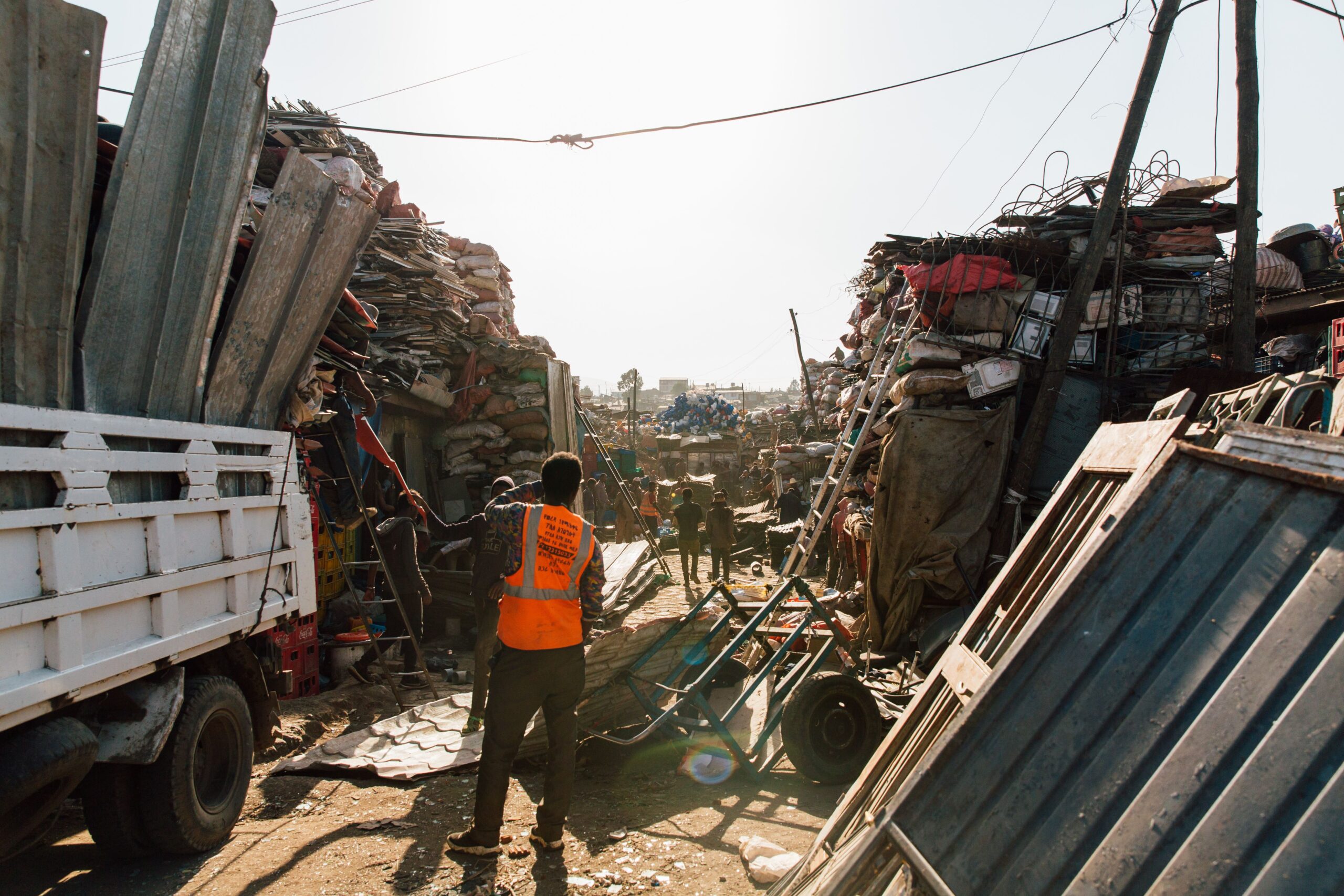
Consider a coastal fishing community whose catch has declined sharply as ocean temperatures shift and fish populations move. The community has not relocated. The families are still there, in the same houses, using the same water sources, dependent on the same infrastructure. But the economic base that justified their presence, and that once generated the local revenue to maintain services, has eroded. What does water and sanitation planning look like for that community now? What does it assume about their future? And who is doing the assuming?
These are the questions the sector has not yet answered well.
What Current WASH Planning Gets Wrong
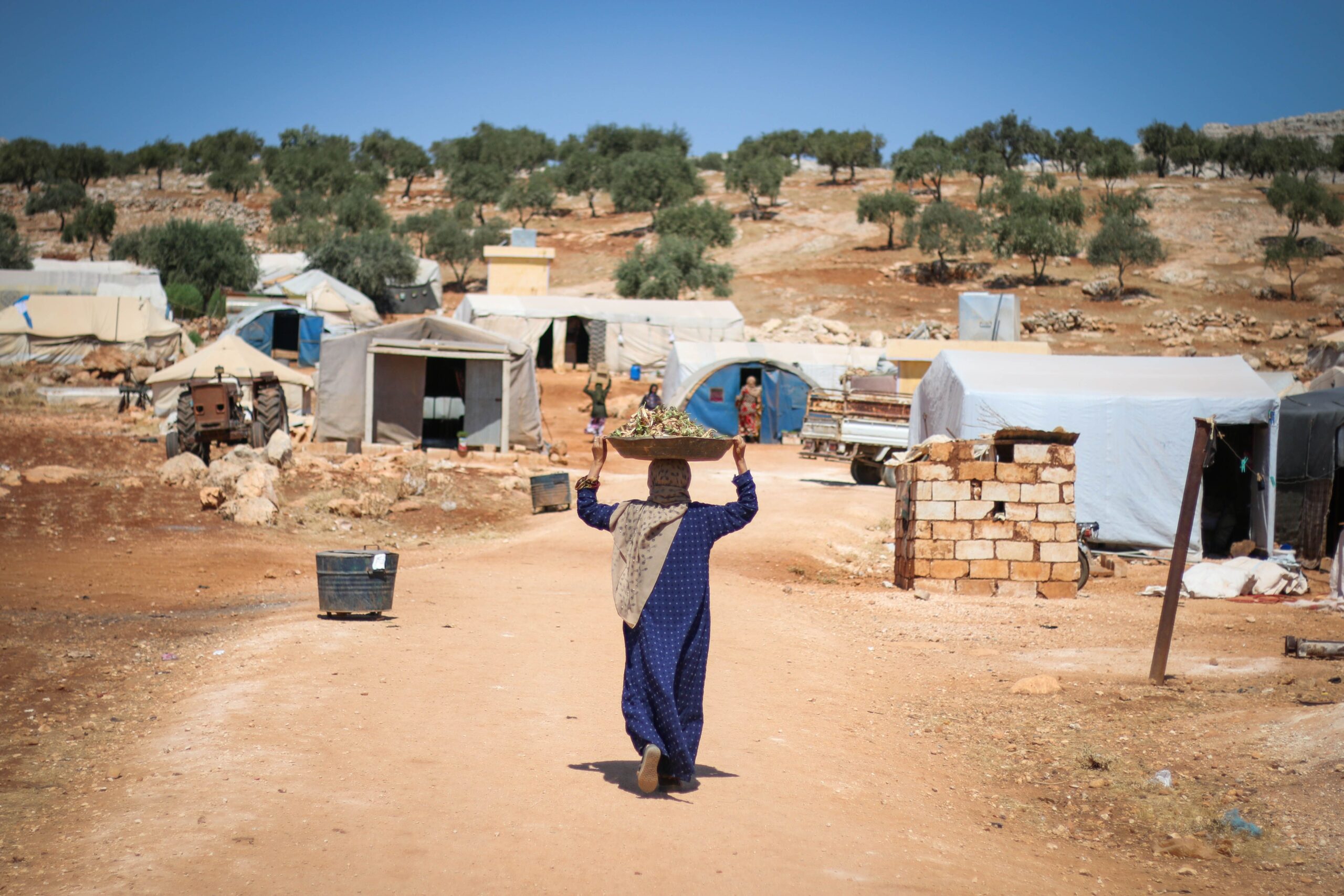
Informal settlements house a significant and growing share of the global urban population. They were built incrementally, often without formal planning approval, on land that nobody else wanted, in locations that are frequently the most exposed to flooding, heat, drought, and environmental degradation. They were never designed for the climate conditions they now face. In many cases, they were never designed at all in any formal sense.
When WASH infrastructure is planned for these communities, it tends to carry an implicit assumption: that the population is temporary, transitional, or will eventually be relocated to somewhere more suitable. This assumption shapes investment decisions, infrastructure standards, maintenance arrangements, and the level of community involvement sought. Why build for permanence when the plan, however unspoken, is eventual relocation?
The problem is that relocation rarely happens at the scale or speed that planning assumptions require. Communities stay. Infrastructure built for temporariness deteriorates. Climate conditions worsen. And the communities most exposed end up least served, because the planning frame that should have protected them was built around a future that did not arrive.
Designing for permanence requires letting go of that assumption entirely. It means treating informal settlements as the long-term urban fabric they actually are, and investing in WASH infrastructure accordingly. It means understanding livelihoods well enough to know what climate change is doing to them, because water and sanitation systems that do not account for the economic realities of the people using them will not be maintained, funded, or trusted.
WASH Infrastructure That Works With Changed Environments
Designing for communities that are staying in changed environments is not simply a matter of building more durable infrastructure. It requires thinking differently about what infrastructure is for and how it generates value in the communities it serves.
Henock Belete Asfaw, whose work focuses on circular economy approaches to wastewater and resource recovery, argues that the most resilient systems are the ones that generate tangible local value rather than simply managing waste. A sanitation system that produces biogas for cooking fuel, or recovers nutrients for urban agriculture, gives communities a concrete economic reason to maintain it. Maintenance becomes self-interest. That alignment, more than engineering quality alone, is what determines whether a system survives in a resource-constrained environment over the long term.
Sumeet Pawar, who works on nature-based solutions across complex low-resource contexts, makes a related point about operational sustainability. The systems that endure are not the most technically sophisticated. They are the ones where sustained investment in local operational knowledge means that communities can diagnose problems early, adapt to changing conditions, and keep things running without waiting for external support. In climate-changed environments where conditions are variable and unpredictable, that adaptive local capacity matters more than any fixed technical specification.
Both arguments point in the same direction: climate-adapted WASH infrastructure needs to be designed around the communities using it, their economic realities, their existing knowledge, and their capacity to maintain what they are given. That is harder to fund and slower to design than a standard infrastructure package. It is also significantly more likely to still be functioning in ten years.
Planning With Communities, Not Around Them
The communities that are staying in climate-changed environments are not passive. They are already adapting, already problem-solving, already developing strategies for survival that formal development systems are often too slow or too distant to see. They have detailed knowledge of local conditions, of what has changed, of what the land and water are doing now compared to ten or twenty years ago. That knowledge is not captured in satellite data or hydrological models. It exists in the community itself.
Effective WASH planning in non-migration contexts starts by taking that knowledge seriously. Not as a consultation requirement to be met before the real design work begins, but as essential intelligence that shapes what gets built, where, and how. Communities that have lived through environmental change have foresight about what is coming that outside experts are still trying to model.
The question the sector needs to sit with is straightforward, even if the answer is not. When the ecology shifts, the livelihoods change, and the population stays, who decides what infrastructure gets built, on what assumptions, and in whose interest? The communities who stay deserve planning systems that start with them rather than arrive at them late. Getting that right is one of the most important things development can do in a climate-changed world.

Comments are closed